

API keys
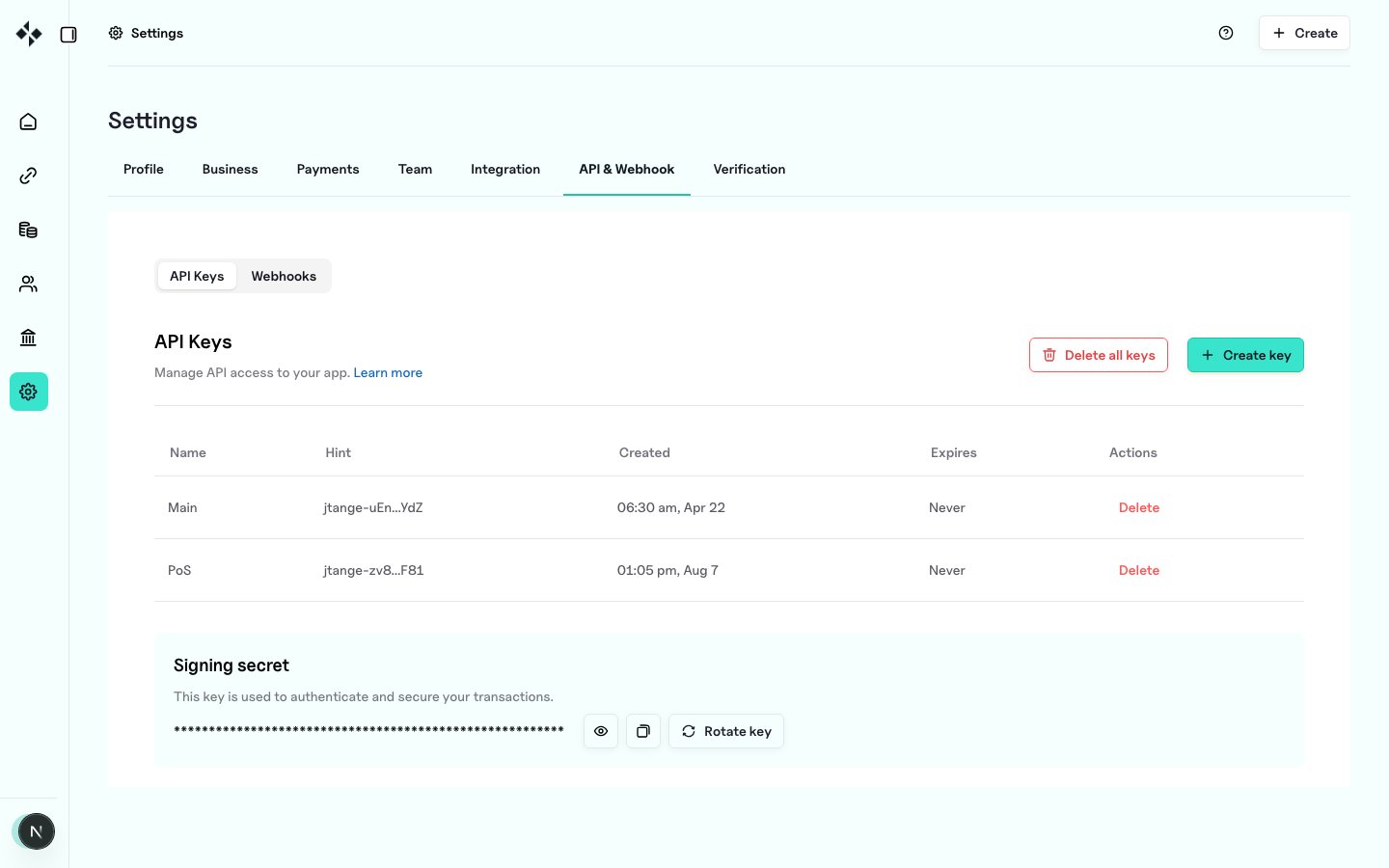
Create and revoke keys in Settings → API & Webhook → API Keys:https://merchants.zbx.boomfi.xyz/dashboard/settings/api-keys
Best practices
- Never commit keys to source control or ship them in browser code
- Prefer separate keys per environment and service
- Rotate keys on a schedule and after personnel changes
Request signing (HMAC)
Some endpoints declare authentication as API key + nonce + signature. Those include permanent pay-in addresses and payouts. Creating or updating a virtual account itself is API-key only unless the operation schema says otherwise. Required headers when signature verification is enforced:
Retrieve or rotate the org request-signing secret (HMAC secret for API calls, not the webhook key pair):
How the signature is computed
The message is the concatenation of:POST+/v1/accounts/virtual/payin/address+nonce-abc+ “ +{"chain_id":8453,"reference":"customer-123"}- Query string is the raw query without
?(empty when none)
/v1/orgs/signing-secret is exempt from request signature checks so you can obtain a secret on first run when signing is enforced.